


Endpoint Posture Anomaly Management: Keeping every device on its security baseline
Most endpoint security tools are built to find known problems.
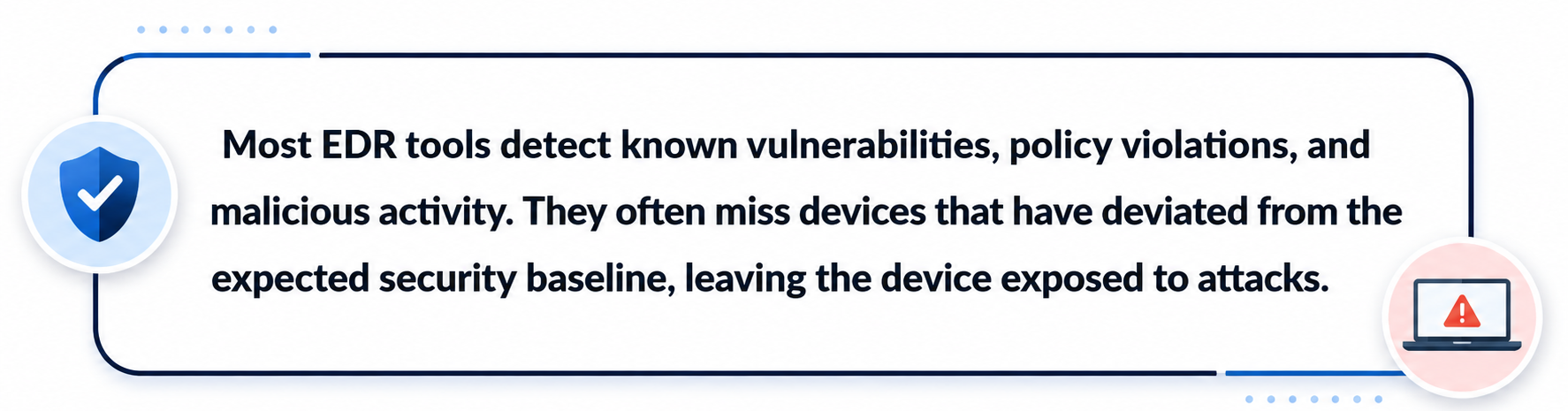
Vulnerability scanners find known software vulnerabilities. Endpoint detection and response tools look for suspicious behavior. Compliance tools check devices against defined controls. Endpoint management tools apply policies and configurations.
These controls are essential. But they do not always show when a device has quietly deviated away from the secure security posture state the organization expects.
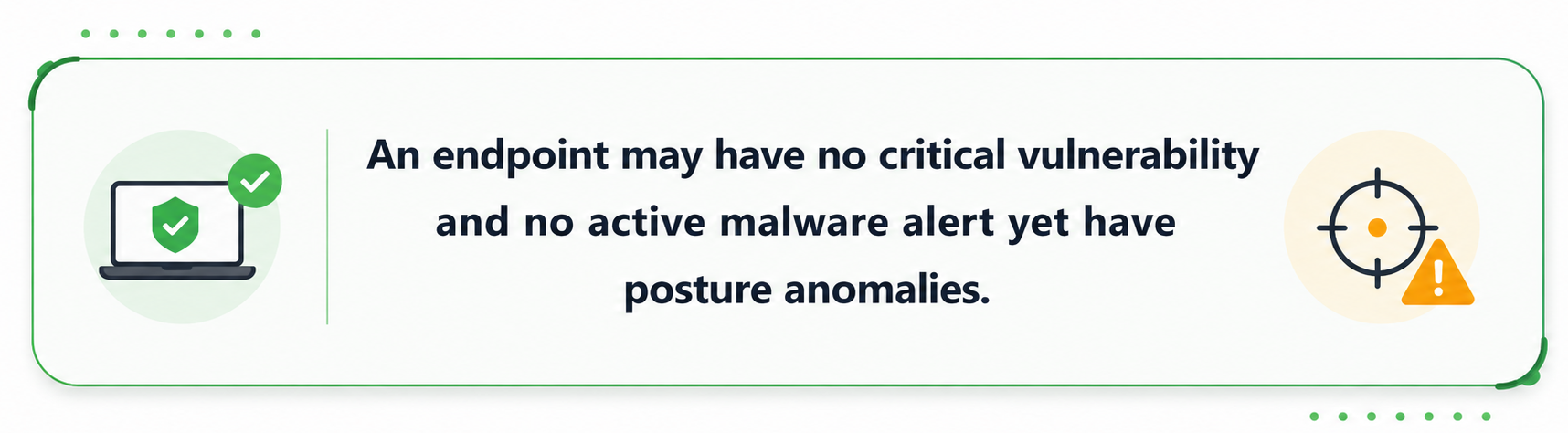
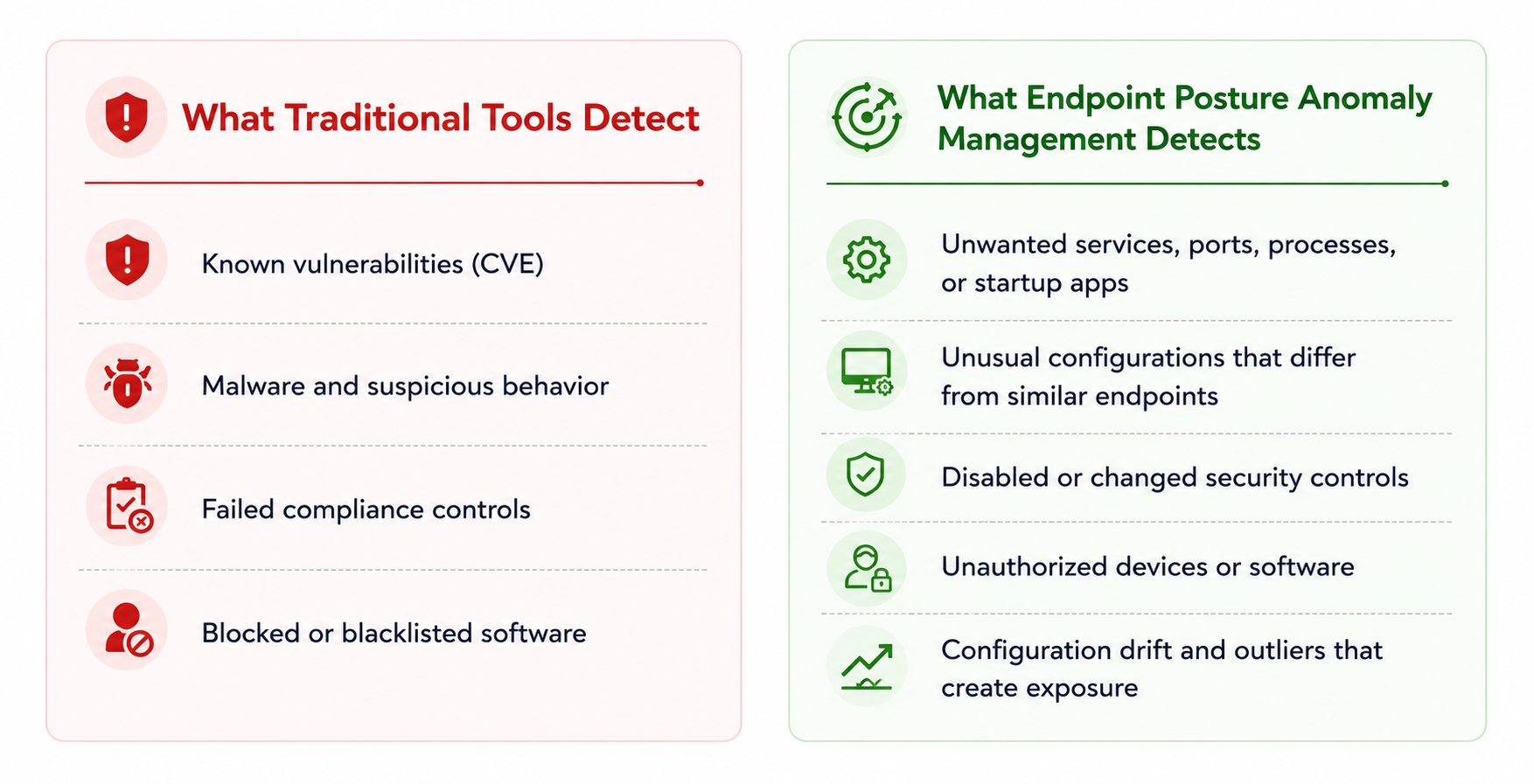
Endpoint posture anomaly management continuously identifies laptops and servers that are misconfigured, uniquely configured, or significantly different from others.
It helps security teams detect and remediate configuration drift, investigate outlier devices, correct risky conditions, and verify that the endpoint and server have returned to a secure posture that is aligned to organization’s security policies.
What is endpoint posture anomaly management
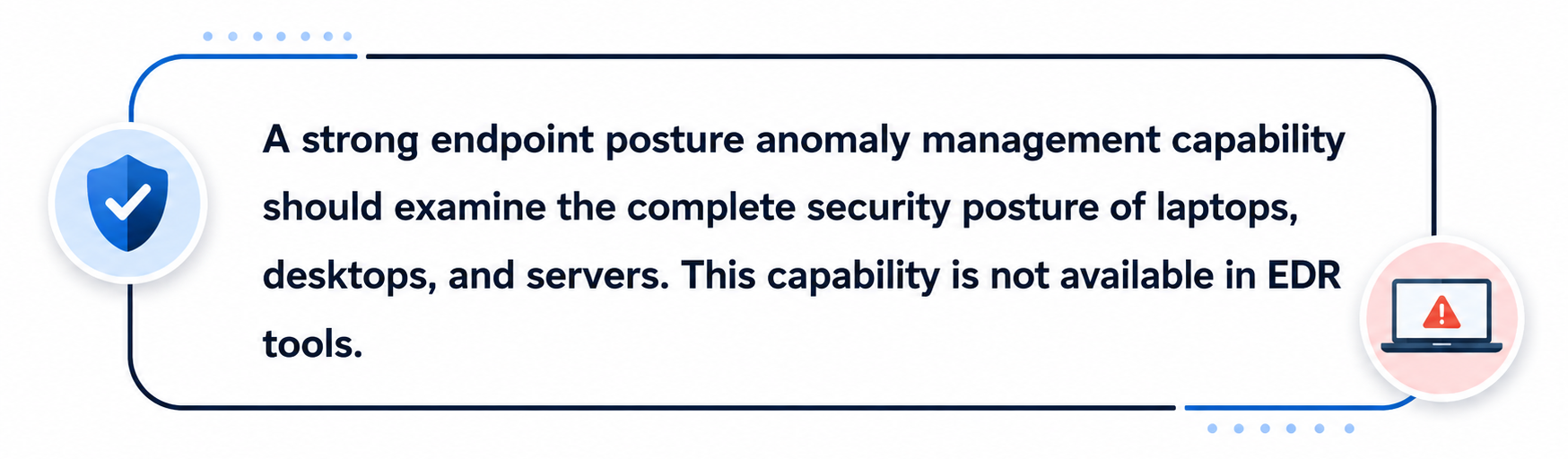
Endpoint posture anomaly management is the continuous process of monitoring device parameters to detect, assess and remediate unusual security conditions such as posture anomalies, including outliers, aberrations, and deviations across laptops, servers and desktops.
The objective is to continuously verify whether the endpoint is still having the expected security posture.
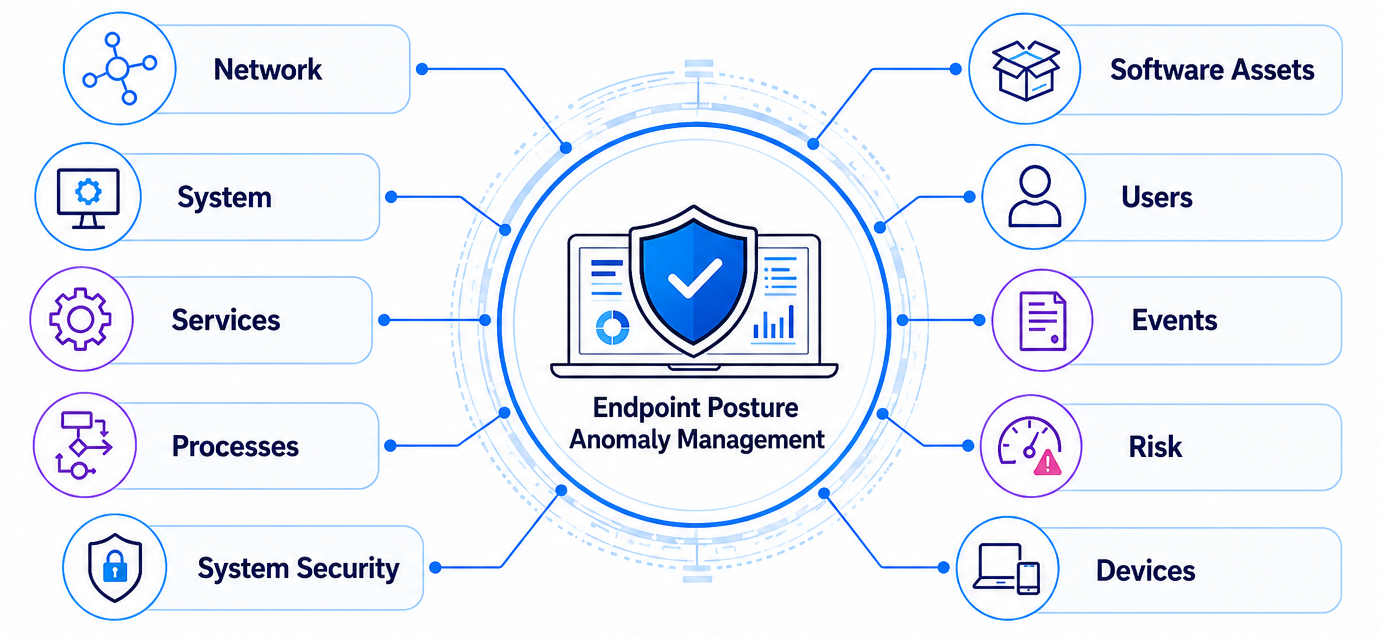
Here are the high-level device parameters to verify whether the endpoint hasn’t deviated from the security baseline.
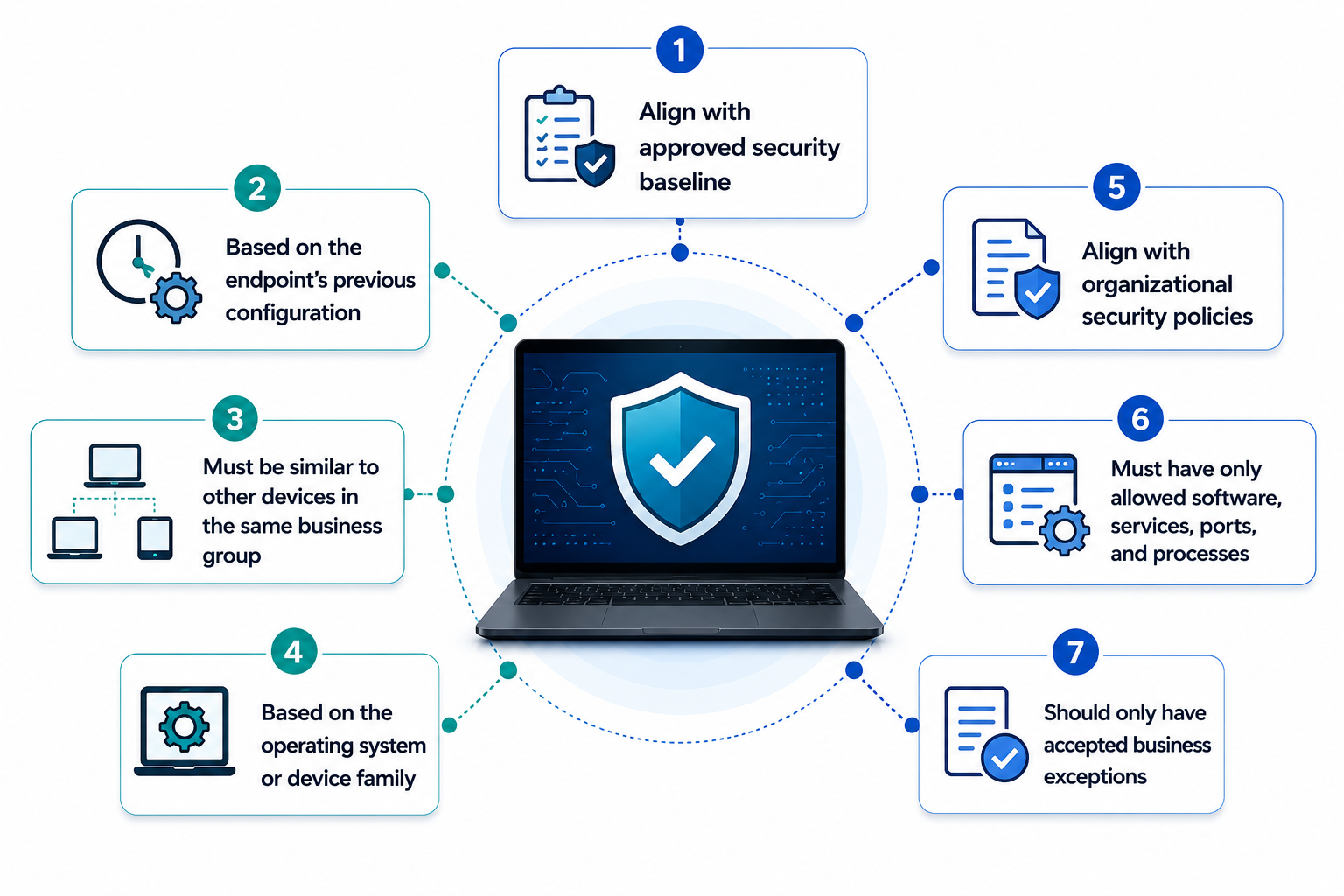
An endpoint posture anomaly appears when a device differs significantly from that expected security baseline.
The difference may be harmless. It may be a valid exception. It may also be the first sign of configuration drift, unauthorized change, weak security control, or emerging exposure.
The role of endpoint posture anomaly management is not to treat every difference as a threat. Its role is to make important deviations visible and actionable for remediation.
Why endpoint compliance tools don't detect security baseline changes
Most endpoint controls are built to recognize what security teams already know to look for.
The problem is that some endpoint risks emerge as unusual changes or deviations that do not match any existing signature.
Here is an example. Consider an organization with 5,000 employee laptops.
Almost every laptop uses the same firewall settings, VPN software, startup applications, and endpoint controls. However, one device can create exposure.
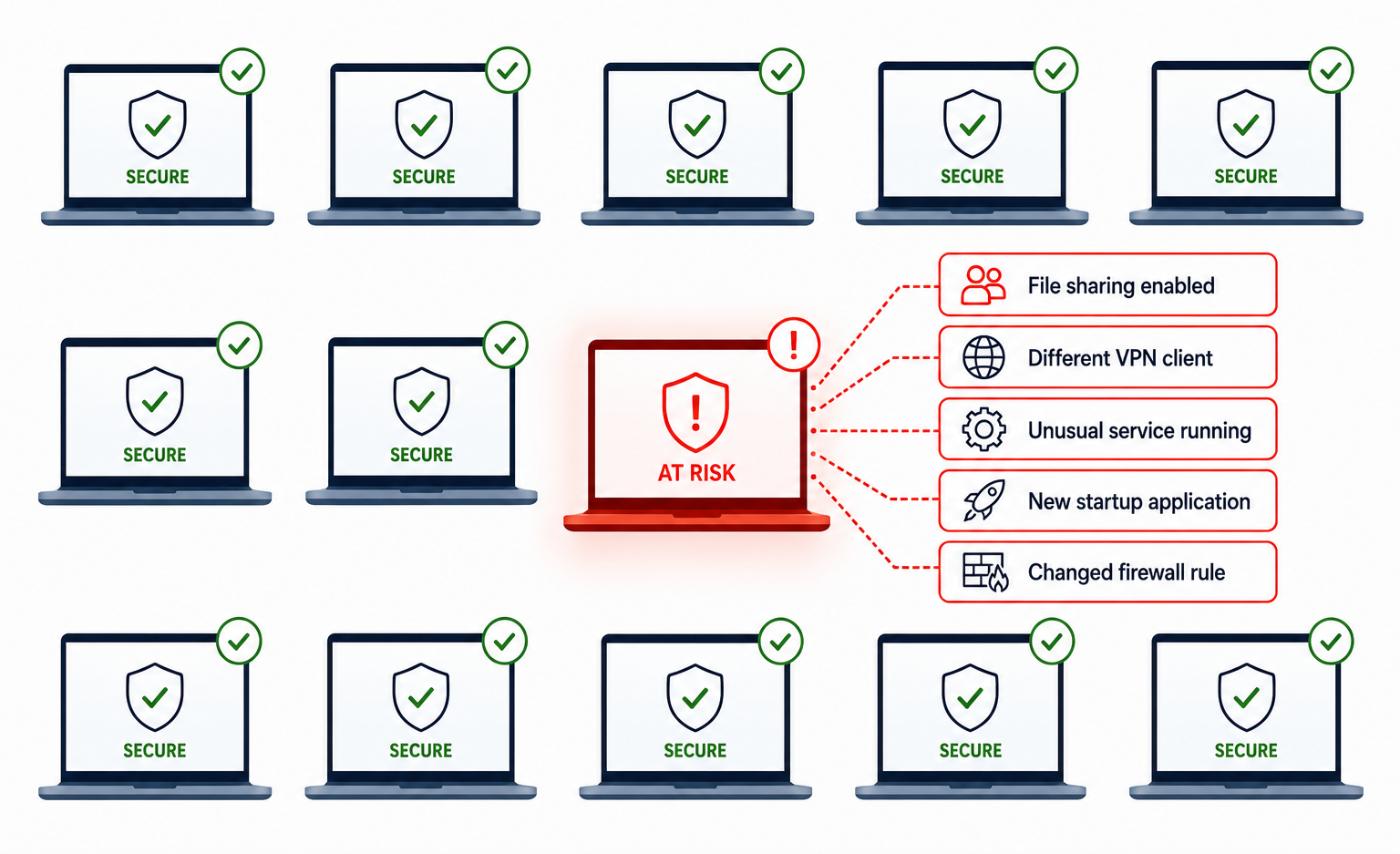
This device may still pass a vulnerability scan. It may not generate an EDR alert. It may even remain technically complaint. But it is different from its peers. This difference or deviation is the what the endpoint posture anomaly management can remediate.
What causes security baseline or configuration drift in endpoints
Endpoint environments change constantly.
Devices are patched, applications are installed, local administrators make changes, employees work remotely, new business units are added, old configurations remain after migration and temporary exceptions become permanent.
These changes create posture anomalies. Here are some of the common causes.
- Configuration drift
A device functions with the approved security baseline but changes over time. For E.g., a firewall setting being altered, BitLocker being disabled, or a system service being enabled after a software update.
- Unsigned/Unauthorized software or services
A user or administrator installs unapproved software or enables an unnecessary service, creating a configuration change that may expand the attack surface, or bypass established security controls.
- Inconsistent endpoint controls
Security agents, encryption settings, antivirus controls, or local policies are configured differently across similar devices, creating anomalies
- Operational exceptions
A temporary business need leads to a configuration change or security exception that remains after it is no longer required creating a deviation from the approved baseline - Mergers and acquisitions
Newly inherited devices from a merger or acquisition may use different security tools, policies, applications, and configurations, creating inconsistent controls and increasing the risk of unmanaged exposures - Remote and hybrid work
Devices operating outside the corporate network get less direct oversight, leading to unauthorized local changes, delayed policy updates, and inconsistent security configurations harder to detect and control.
Detecting rogue devices, unauthorized software and other endpoint posture deviations
By continuously monitoring 10 critical areas across endpoints, posture anomaly management can empower security teams to proactively reduce risk and enable in building a comprehensive security posture.
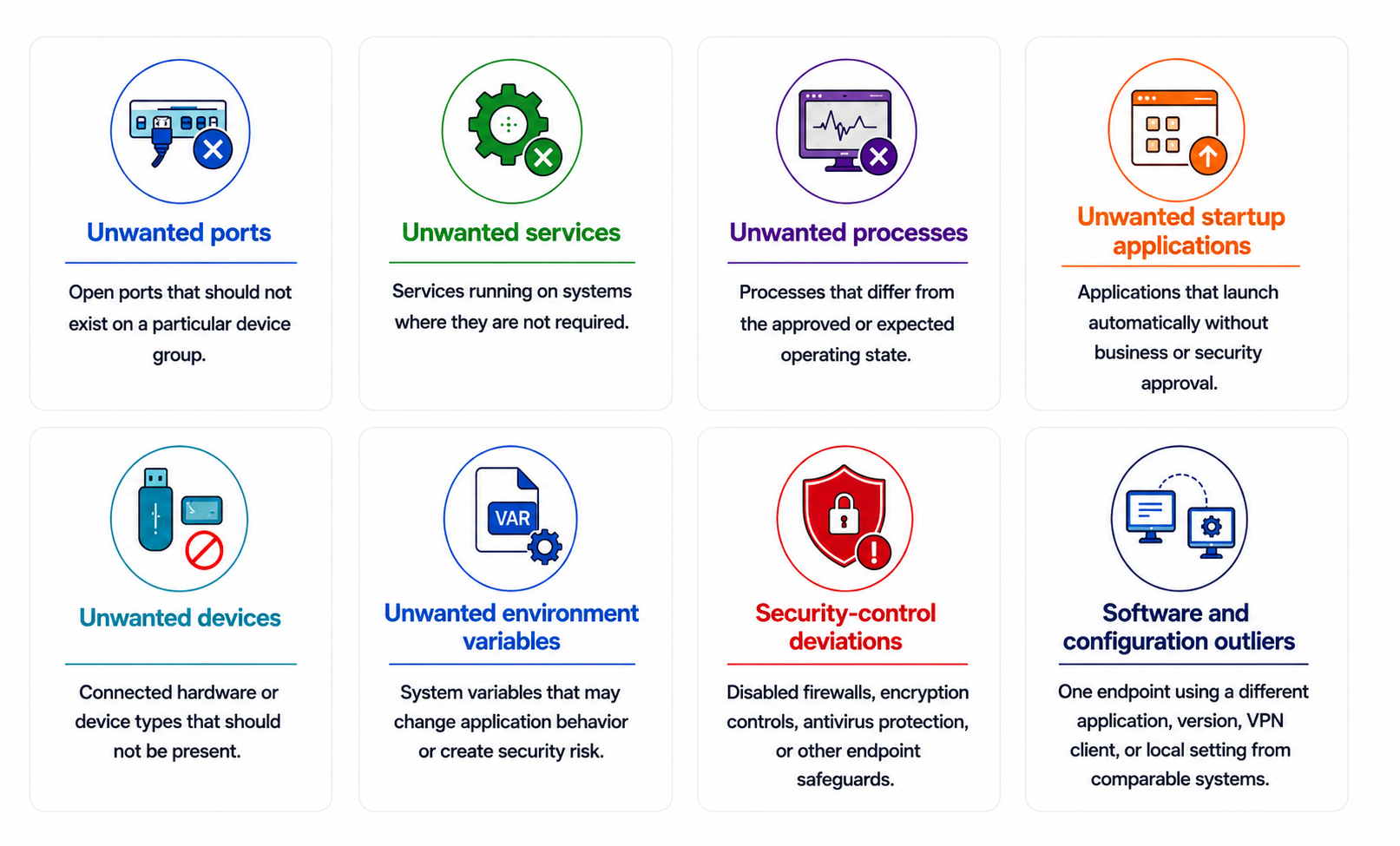
Endpoint posture anomaly capability can monitor many parameters to identify outliers, deviations, and aberrations across them. Here are some examples.
How posture anomaly management works: from security baseline to endpoint remediation
Endpoint posture data is collected and compared against approved security baseline. The deviations are detected, prioritized by confidence, and verified with device-level context. All risks are remediated and confirmed to ensure the endpoint is back to its expected secure state.
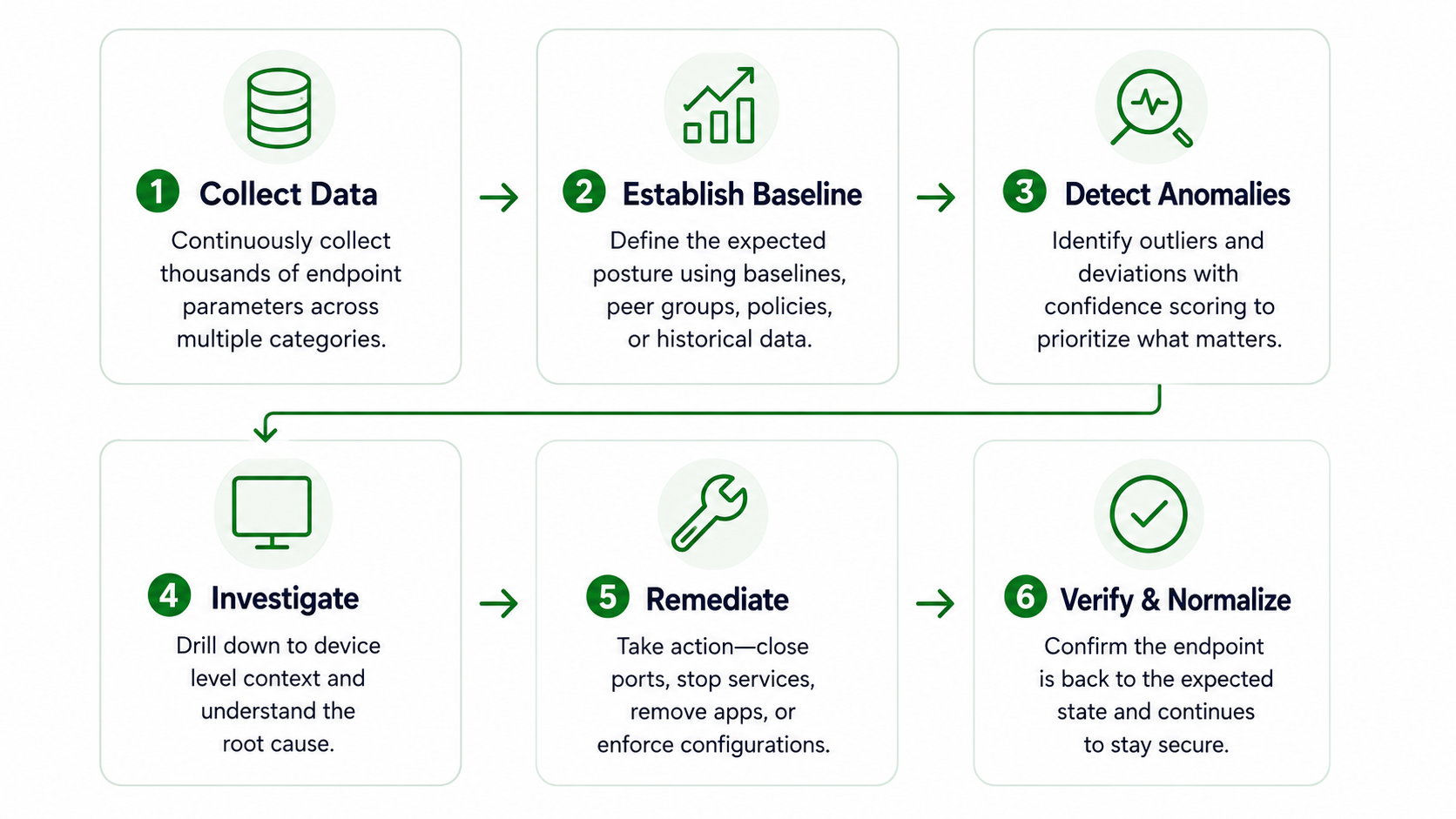
- Collect endpoint posture data
The platform gathers current information from managed devices. This includes operating system details, processes, ports, services, software, users, security settings, network configurations, and device status. - Establish the expected posture
The system determines what normal or approved posture should look like. This may be based on a baseline, peer group, historical state, security policy, or administrator-defined condition. - Detect anomalies and outliers
Devices that differ significantly from the expected state are identified. The system may also calculate a confidence score based on how far a device deviates from the baseline. - Investigate the affected device
Security teams need device-level context to investigate an anomaly.
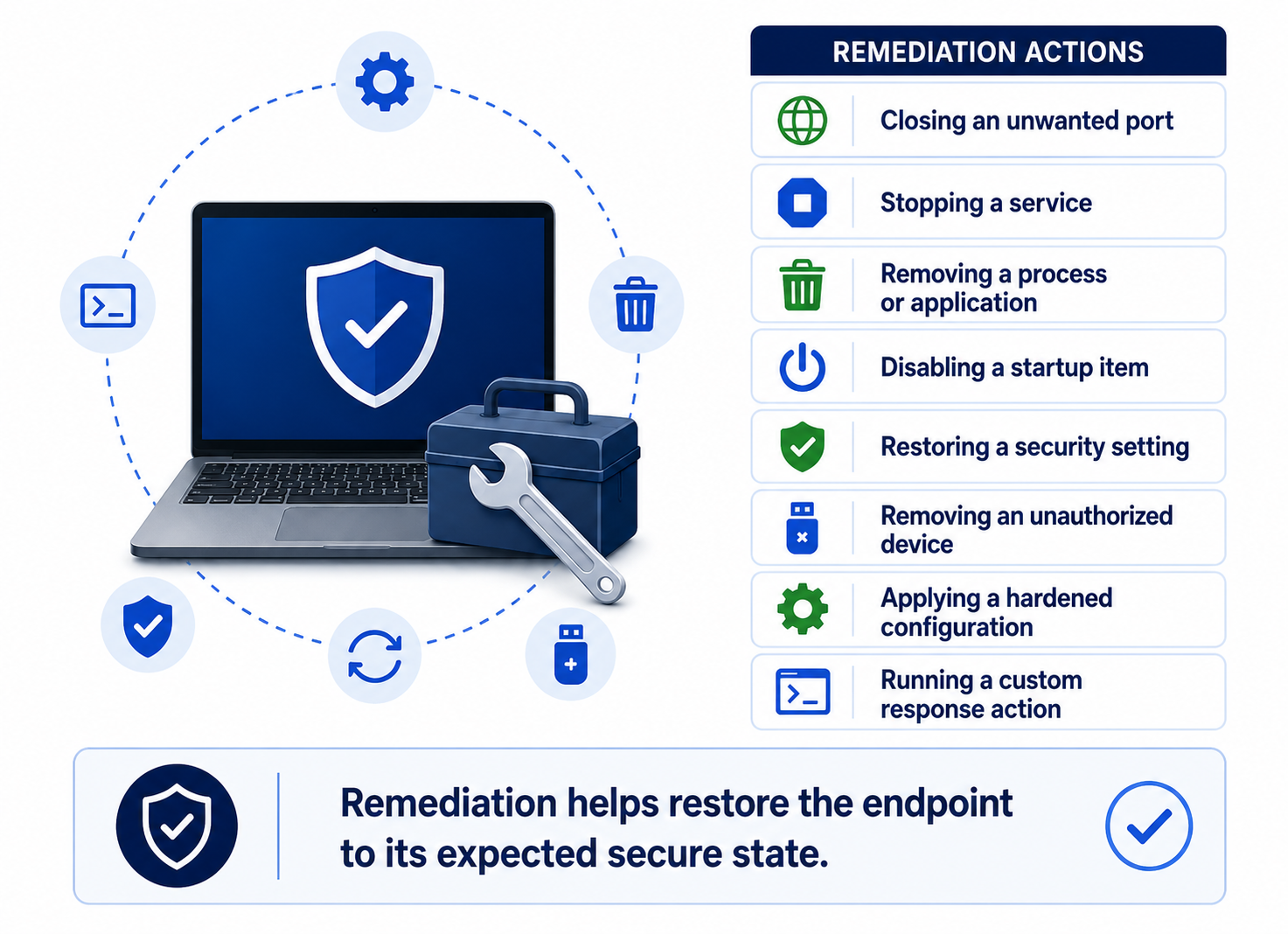
5. Whitelist valid exceptions
Not every deviation is dangerous. Some systems require different services, ports, applications,
or configurations. These should be documented and excluded without hiding unrelated risk.
6. Verify normalization
The endpoint should no longer appear only as an anomaly. The endpoint is verified and
confirmed that it has returned to the acceptable secure state.
Why confidence score matter in posture anomaly management
Large endpoint environments contain legitimate differences.
A server should not be compared with a sales laptop. A developer workstation may require tools that would be unusual on a finance endpoint. A Linux server may have different services from a Windows server.
Hence, context is important in posture anomaly management. To emphasize context, confidence scores are critical.
Confidence scores are calculated based on how far the anomaly detected deviates from the baseline. The confidence level is further classified into high, low, and medium.
A high-confidence anomaly may indicate a major difference that requires immediate attention. A medium-confidence anomaly may need validation. A low-confidence anomaly may represent a minor variation or valid exception.
This helps teams focus on the devices most likely to create exposure rather than reviewing every difference manually.
Why custom detection rules are needed
Every organization has a different operating environment. Generic posture anomaly rules cannot define every unwanted device condition.
Security teams should be able to specify what is allowed or unwanted across these found in endpoints.
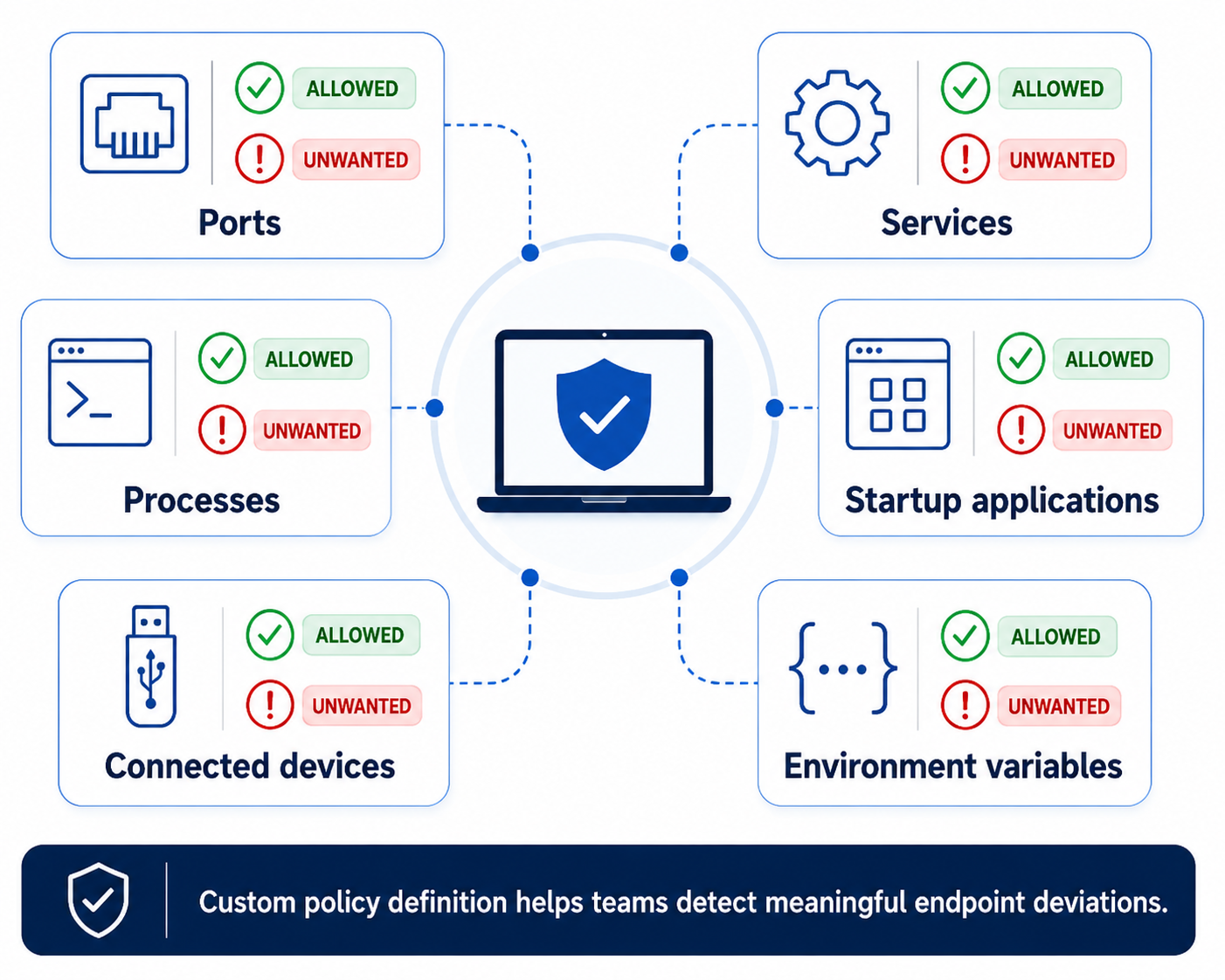
They should also be able to build custom detection and remediation rule for specific endpoint conditions. This allows the organization to move beyond generic endpoint checks and define posture based on its own infrastructure, business requirements, and risk tolerance.
What security teams gain by using posture anomaly capabilities for endpoint security posture management
The value of endpoint posture anomaly management is operational control.
- Visibility into unknown endpoint risk
Teams find device conditions that are not represented by a CVE, malware signature, or compliance rule.
- Faster investigation
Security teams can identify the exact device, configuration, category, and level of deviation.
- Lower manual effort
Analysts spend less time comparing devices, running scripts, and searching through endpoint data.
- Stronger endpoint security hygiene
Devices remain closer to the organization’s approved configuration.
- Faster remediation
Detection, investigation, and response are connected within one operating process.
- Proof of normalization
Teams can verify that a risky device has returned to an acceptable posture.
Endpoint security cannot stop at vulnerabilities, malware, and compliance checks. Security teams also need to know when one device has become different from the rest.
Endpoint posture anomaly management gives teams the visibility and control to identify that difference early.
It continuously monitors endpoint posture, compares devices with expected security baseline, highlights meaningful deviations, supports investigation, enables remediation, and confirms normalization.
The intent is to find the differences that weaken endpoint security before they are found by attackers.
Gain control of your endpoint security posture with Saner posture anomaly management capabilities
Saner with its posture anomaly management capability extends exposure management beyond known vulnerabilities.
It continuously identifies endpoints that have deviated from their expected security baseline across ports, services, processes, software, devices, security controls, and configurations.
Security teams can assess confidence, investigate affected devices, whitelist valid exceptions, remediate risky conditions, and verify normalization within the same workflow.
Know more about Saner’s posture anomaly management for endpoints


